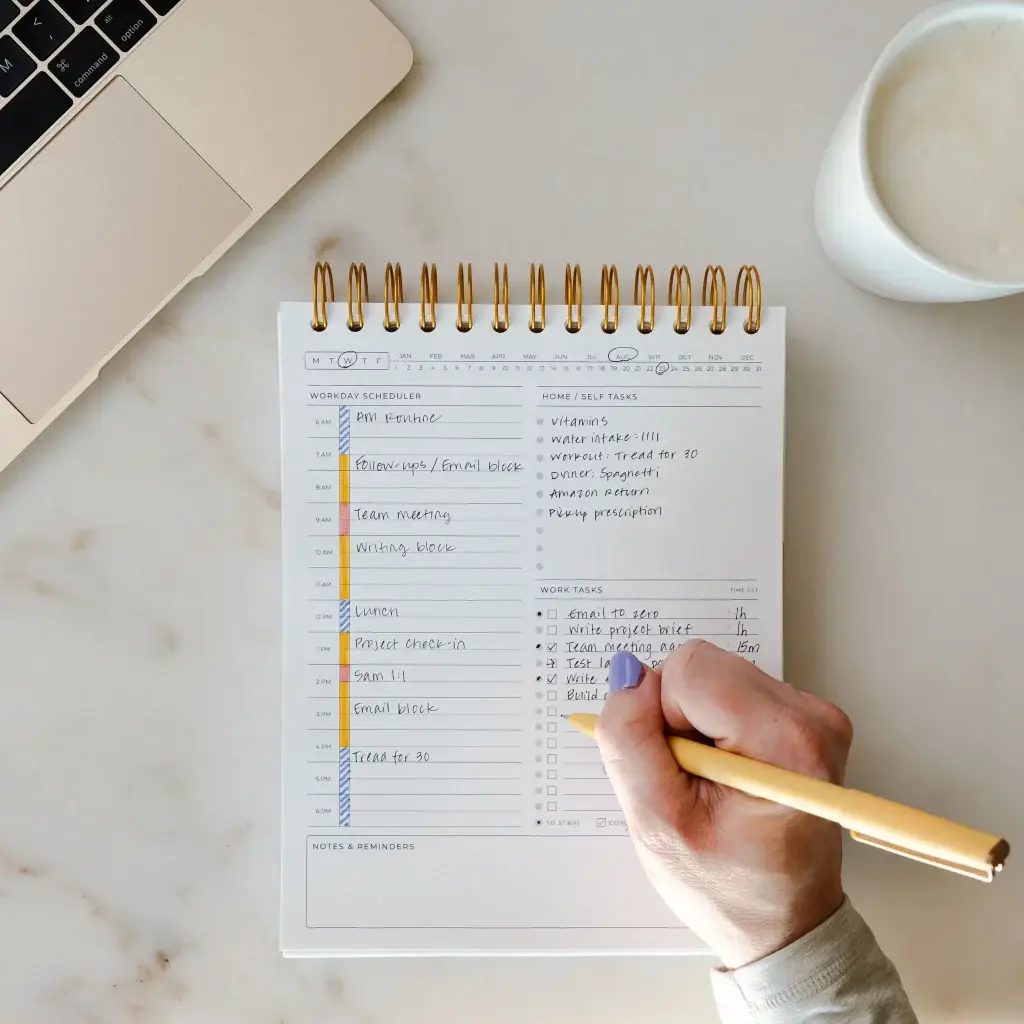

We don’t notice how often we get distracted
I started noticing this when I had one of those days where I was “busy” from morning to evening, but at the end of the day I couldn’t clearly explain what I actually finished. I had emails open, messages open, a few tabs open, checked the news at some point, watched a couple of short videos I don’t even remember, and somehow the day was gone.
It didn’t feel like I wasted the day. It just felt like the day disappeared in small pieces.
That’s the tricky thing about digital distractions. They don’t look like a big problem in the moment. Checking a message takes ten seconds. Opening a tab takes five seconds. Looking at a notification takes two seconds. But when this happens all day, your attention gets chopped into tiny pieces.
And once attention is fragmented, it’s very hard to do anything that requires real thinking.
Attention is being fragmented all day
Most people think they don’t have enough time. In many cases, they actually don’t have enough uninterrupted attention.
Every time you switch tasks, your brain has to reload what you were doing. Where was I? What was the next step? What was I thinking about before I got interrupted? That small reset happens every time you check your phone, open a new tab, or answer a quick message.
Do that enough times and your brain never goes deep into anything. You stay on the surface all day. You are active, but not effective.
Deep thinking requires long stretches of uninterrupted attention, and those stretches are becoming rare. Research discussed by Harvard Health Publishing has also explored how constant interruptions and digital overload can reduce concentration and increase mental fatigue.
Multitasking mostly just means switching quickly
I used to think I was productive because I could jump between things quickly. I would answer messages, work for a few minutes, check something online, come back to work, open another tab, reply to someone, and repeat that all day.
It felt productive because I was constantly doing something.
But at the end of the day, my brain felt tired and foggy, and I hadn’t made much real progress on anything important. I wasn’t multitasking. I was just interrupting myself all day.
Busy is not the same as focused.
The phone is a distraction machine
Most distractions today live inside one small device that we carry everywhere.
You pick up your phone to check one thing, and ten minutes later you are watching something completely unrelated, reading comments from strangers, or scrolling through things you won’t even remember tomorrow. It happens so easily that you don’t even notice when you lost your attention.
Sometimes I catch myself reaching for my phone even when there is no notification. It’s almost like a reflex. That’s when you realize how deep the habit goes.
It’s not really about discipline anymore. The environment is just designed to capture attention.
Distraction is also an energy problem
One thing I didn’t expect is how tiring distraction is.
There is a specific kind of tired that comes from a day of constant interruptions. You are not sleepy, but you don’t want to think anymore. Even simple tasks feel heavier. Your brain just feels done.
That kind of tired usually comes from switching tasks all day, reacting to notifications, and never staying on one thing long enough to build momentum.
A focused day is often less tiring than a distracted day, even if you worked just as many hours.
We removed boredom from life
There used to be small pockets of boredom everywhere. Waiting in line, sitting on a bus, walking somewhere, sitting quietly for a few minutes. Those small moments were not useless. That was time where the mind could wander, think, process, and connect ideas.
Now the moment there is nothing happening, people reach for their phone. Waiting in line becomes scrolling time. Sitting on a bus becomes video time. Even walking has become podcast time.
The brain never gets a break anymore.
But boredom is not the enemy. Boredom is often where ideas come from.
The real cost of digital distraction
The cost of digital distraction is not just lost time. It’s something more subtle.
It’s the slow loss of your ability to focus on one thing for a long time. It’s the loss of patience for difficult work. It’s the habit of reaching for stimulation the moment something becomes slightly uncomfortable. It’s starting many things and finishing fewer things. It’s feeling busy all the time but not moving forward on the things that actually matter.
Distraction doesn’t just steal minutes. It changes how you think.
Protecting your attention is becoming a life skill
We talk a lot about time management, but attention management might be more important now.
If you don’t protect your attention, something else will take it. Apps, notifications, endless feeds, news, messages, videos, ads. There are entire industries designed to capture and hold your attention for as long as possible.
So protecting your attention is no longer just a productivity trick. It’s a life skill.
And most of the time, the solution is not complicated. It’s things like putting your phone in another room while you work, turning off most notifications, closing tabs you don’t need, and allowing yourself to be bored sometimes without immediately filling the silence.
It sounds simple, but those small changes are the only way I’ve found to actually think clearly and work on things that matter.
Otherwise, the day just disappears in small pieces.
Continue Your Learning
If you’d like to take control of your attention and reduce digital distractions, these books offer practical, research-backed strategies for building healthier technology habits and improving your ability to focus.
- Digital Minimalism by Cal Newport
Discover a practical philosophy for using technology intentionally instead of letting it control your time and attention. - Indistractable by Nir Eyal
Learn why distractions happen and how to build systems that help you stay focused on what matters most. - Deep Work by Cal Newport
A practical guide to developing sustained concentration and producing meaningful work in an increasingly distracted world.